best dead by daylight survivor perks
Best Dead by Daylight Survivor Perks
Current top survivor perk picks for consistency, chase stability, and objective conversion. This page is evergreen and optimized around consistent value in real queue conditions. The core filter emphasizes Solo, Aura, Window so you can build around clear match jobs instead of random perk stacking. This is the broad survivor intent, so the page prioritizes perks that stay useful across solo queue, duos, and SWF without requiring narrow setups.
Role
Survivor
Signals
Solo, Aura, Window, Endurance
Update Notes
Checked against current perk pool (Last verified 2026-02-27).
Who This Is For
- Players who need reliable value in solo queue and duo/SWF lobbies.
- Survivors who lose tempo after first chase and need cleaner role-based loadouts.
- Anyone specifically solving for solo outcomes this patch cycle.
- Anchor one perk for first-chase stability so you are not trading hook tempo instantly.
When To Skip
- Skip this setup if your team is already over-stacking the same survivor job.
- Do not force these picks if your biggest issue is route discipline rather than perk value.
- Adjust for your comfort pool when one high-ranked perk has inconsistent uptime for you.
- Over-stacking pure altruism with no personal consistency.
Loadout Construction Rules
- Slot 1: lock a primary win-condition signal (Solo).
- Slot 2: add a second primary signal (Aura) so value windows overlap.
- Slot 3: use a consistency bridge (Gen Rush) for unstable mid-game states.
- Slot 4: flex into matchup insurance (Heal) for close matches.
- Swap one perk at a time and track whether first-hook and endgame outcomes improve.
Quick Wins For This Query
- Anchor one perk for first-chase stability so you are not trading hook tempo instantly.
- Run one information slot so rotations are planned instead of reactive.
- Keep one objective slot so chase value still converts into escapes.
Biggest Throws To Avoid
- Over-stacking pure altruism with no personal consistency.
- Running four perks that only pay off after you are already losing.
- Copying coordinated builds into solo queue without fallback value.
Review policy
Perkatory pages are reviewed against current patch notes, in-game behavior checks, and source consistency checks before updates are published.
Patch 9.4.2 · Last reviewed 2026-02-27
Found an issue? Send corrections through Contact or read our policy on About.
Core 4 Picks
Matches: Solo, Window, Repair, Gen Rush
Matches: Solo, Aura, Window, Repair
Matches: Solo, Aura, Endurance, Unhook
Matches: Solo, Aura, Window, Team




Extended Picks
#1
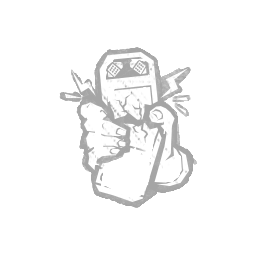
While injured, interaction speeds like cleansing, healing, repairing, vaulting, opening, sabotaging, searching chests, and unhooking are faster.
#2
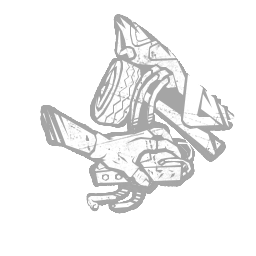
After repairing generators enough, you can trap a window; when the Killer vaults it, they become Hindered for a short duration, and the trapped window’s aura is revealed to all Survivors until the trap triggers or expires.
#3
After being unhooked, temporarily blocks your aura, hides grunts and scratch marks, and grants Endurance until disabled by endgame or a conspicuous action.
#4
After crouching to activate, you reveal nearby auras—including Survivors, the Killer, and key objects—while gaining Elusive and Oblivious before the effect ends and goes on cooldown.
#5
Perform a long basement invocation that others can help speed up; completion permanently reduces generator repair requirements but leaves you injured and Broken for the rest of the trial and disables other copies of this invocation.
#6
While you repair a generator, its aura is revealed to all Survivors, and if the Killer downs someone during this time, all Survivor auras are temporarily revealed to you.
#7
After repairing generators enough, you can trap a generator so that when the Killer tries to damage it, they are briefly stunned and nearby players are blinded, with the trapped generator’s aura visible to all Survivors until the trap is used or expires.
#8
After repairing for a while, can block your current generator and reveal it to all Survivors, only when repairing alone.
#9
While repairing, can install a Wiretap on a generator to reveal the Killer's aura when they enter its area, then it is removed if kicked or after a duration.
#10
Reveals the three generators closest together and slightly speeds repairing them.
#11
When the Killer reads your aura, you see theirs and gain small action speed bonuses; if you are the Obsession, your aura periodically reveals to the Killer.
#12
When the Killer looks at you within range, warns via the perk icon and slightly speeds many interactions, lingering briefly after they look away.







Unlock Path Notes
Source: All Survivors
Source: Dustin Henderson
Source: Zarina Kassir
Source: Eleven
Source: Sable Ward
Source: Nancy Wheeler
Signal Playbook
Solo
Prioritizes independent value that does not require coordinated comms.
Aura
Converts hidden information into cleaner rotates and better target selection.
Window
Improves loop routing and transition consistency around window tiles.
Endurance
Creates safe windows for risky transitions and post-hook repositioning.
Repair
Accelerates objective completion or protects objective throughput.
Gen Rush
Front-loads objective tempo so early game states become favorable.
Heal
Stabilizes reset cycles so chip damage does not snowball into collapse.
Unhook
Creates safer saves and cleaner trade sequencing.
Match Plan By Phase
Early
- Use your first primary signal to stabilize opening routes and avoid free downs.
- Convert information quickly into either generator uptime or safe rotation.
Mid
- Anchor decisions around hook-cycle tempo and keep one fallback trigger available.
- Trade only when your perk windows protect the transition afterwards.
Late
- Shift one slot to endgame value if gates or hatch become the win condition.
- Protect team spacing so one mistake does not erase your objective lead.
Common Mistakes
- Stacking multiple perks that only trigger on the same solo window.
- Ignoring your worst phase and over-optimizing for aura highlights.
- Running four reactive perks and then losing objective pace after one bad chase.
- Copy-pasting top lists without checking whether the perk trigger actually matches your decision patterns.
- Over-stacking pure altruism with no personal consistency.
- Running four perks that only pay off after you are already losing.
Related Guides
Related Best Perks Pages
Use This Page Vs Related Pages
Compared with Most Used Survivor Perks
- Use this page when your priority is broader role consistency.
- Use Most Used Survivor Perks when your priority is broader role consistency.
- Use this page when you want an evergreen baseline.
Compared with Survivor Perk Tier List
- Use this page when your priority is broader role consistency.
- Use Survivor Perk Tier List when your priority is broader role consistency.
- Use this page when you want an evergreen baseline.
FAQ
How often is this survivor list updated?
Checked against current perk pool (Last verified 2026-02-27).
What if I do not own these perks?
Use the perk replacement guide to preserve the same job while lowering ownership requirements.
How should I choose between these options?
Start with the top 4 core picks, then swap one slot at a time based on your queue type and match problems.
Are these pages generated from real perk data?
Yes. Rankings are computed from role-aligned perk metadata and then ordered by signal overlap for this specific query intent.
Should I run all four core perks together?
Not always. Treat the core 4 as a high-confidence pool, then combine them with one consistency slot and one matchup fallback slot.
What is the safest all-around survivor perk core?
One chase consistency slot, one information slot, one objective slot, and one fallback safety slot is the most stable broad framework.
Should beginner survivors copy high-MMR perk lists directly?
Only partially. Keep the structure, but replace high-complexity perks with lower-complexity alternatives until route discipline is stable.